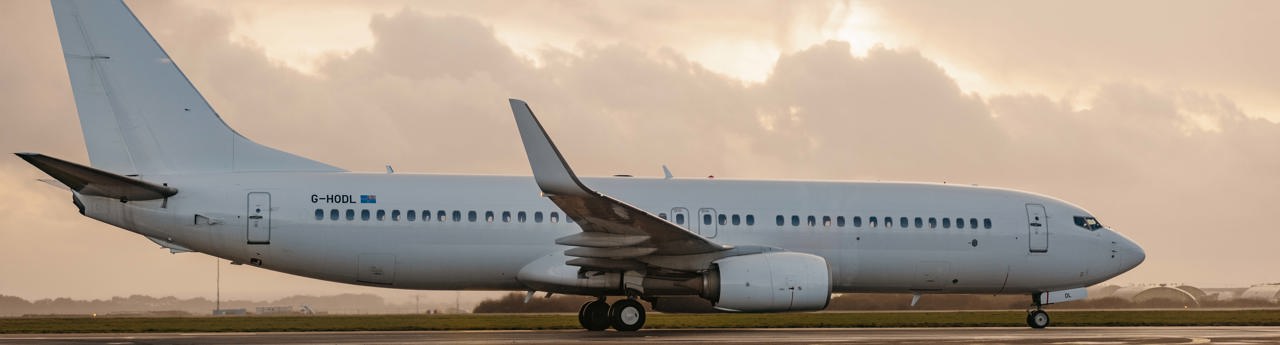
At Cornwall Airport Newquay, commercial aircraft are now taking off using fuel partly made from an unlikely source: used cooking oil.
It's a simple but powerful example of the circular economy in action. Instead of being discarded, waste cooking oil is collected, refined, and transformed into Sustainable Aviation Fuel (SAF). When blended with conventional jet fuel, it works in existing aircraft engines while helping to significantly reduce lifecycle carbon emissions.
Over a year after the UK introduced its landmark Sustainable Aviation Fuel (SAF) Mandate, the policy is already changing what powers aircraft. Although SAF still accounts for only a small share of global aviation fuel, momentum is growing rapidly. The UK's SAF mandate, introduced in 2025, requires sustainable fuel to make up 2% of aviation fuel today, rising to 10% by 2030 and 22% by 2040.
Currently, much of the SAF used in the UK is produced from waste fats, oils and greases, including used cooking oil. Supplies remain limited, but the mandate is designed to encourage investment in the next generation of sustainable fuels, including synthetic alternatives made from captured carbon and renewable energy. By creating a guaranteed market for SAF, the policy aims to accelerate production capacity and strengthen domestic supply chains.
Newquay's current 2% SAF blend is currently estimated to be saving aircraft operators onsite around 279 tonnes of carbon emissions annually - equivalent to planting approximately 4,600 trees and allowing them to grow for a decade…
Each flight powered in part by recycled cooking oil represents a small but meaningful step towards aviation's net-zero ambitions. From fryer to fuel tank, yesterday's cooking oil is helping power tomorrow's journeys - one departure at a time from Cornwall's coast.
Email: contactus@corservltd.co.uk